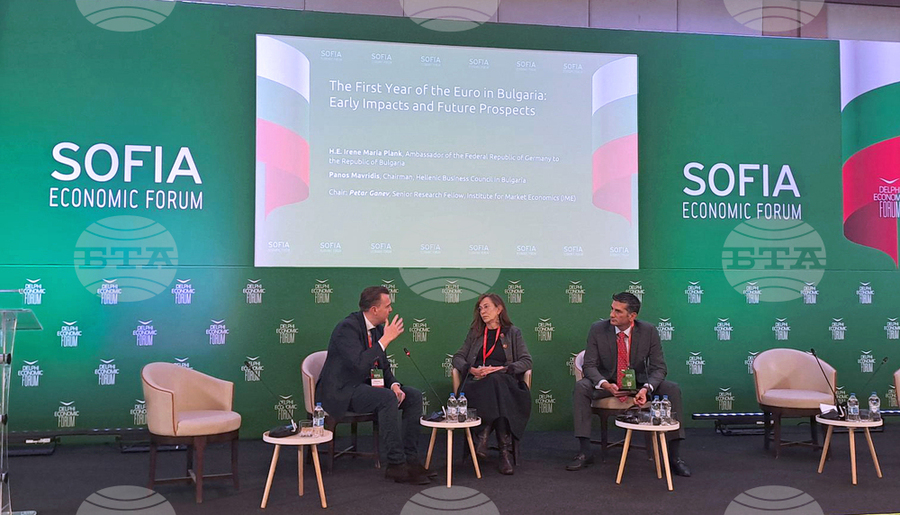
A panel at the seventh Sofia Economic Forum on Monday examined Bulgaria's first year in the euro area, focusing on the economic impact of euro adoption and the opportunities it offers. The forum is organized by the Delphi Economic Forum.
German Ambassador to Bulgaria Irene Maria Plank said Bulgaria's adoption of the euro was much more than a technical matter. Various indicators already showed lower costs and greater convenience, including in banking, she said, adding that "the euro's main value was symbolic - that we are all together in the euro area".
Hellenic Business Council in Bulgaria Chair and Postbank Chief Operating Officer Panagiotis Mavridis said the benefits were not merely symbolic, pointing to the euro's contribution to economic development. "Looking at the past 20 years and the financial crisis, the euro was the cornerstone of Greece's recovery. Without the euro, Greece would not be where it is today," he said.
Mavridis also described the work carried out by banks during Bulgaria's transition to the euro as unprecedented. "We now have one single currency, the euro, which reduces bureaucratic stress and pressure on banks and, even more importantly, on our customers," he said.
He added that other countries and potential investors now viewed Bulgaria as less risky. With the lev no longer in use, he said, the uncertainty associated with a small national currency had disappeared, making investment in Bulgaria easier and more predictable.